


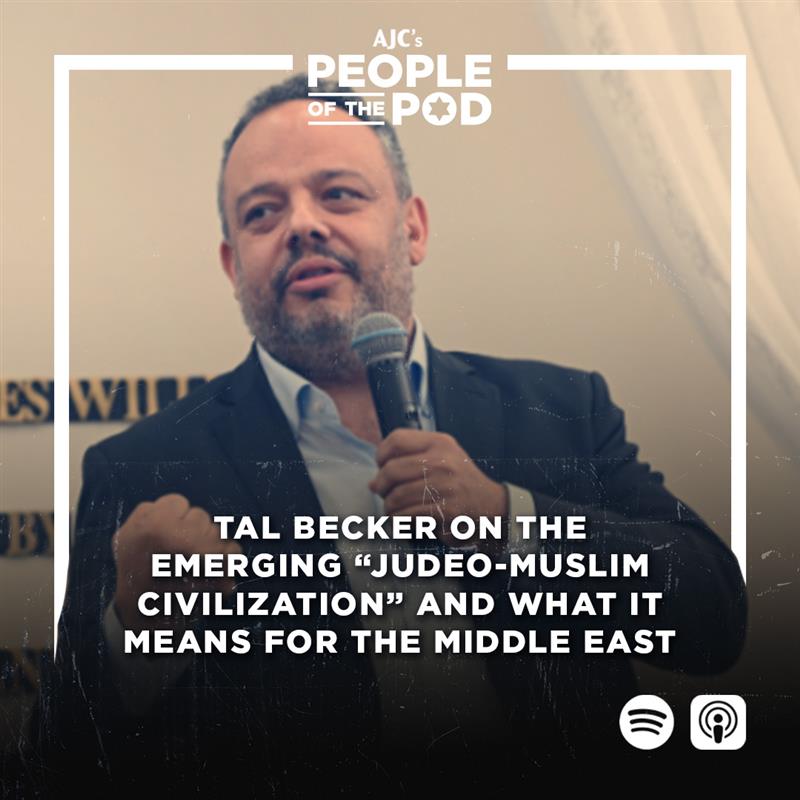
Tal Becker on The Emerging "Judeo-Muslim Civilization" and What It Means for the Middle East
Description
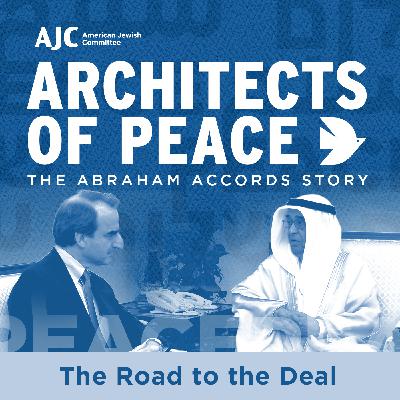
Are we in a 'plastic moment,' an inflection point where the future of the Middle East can finally be reshaped? Veteran peace negotiator Dr. Tal Becker joins the podcast to analyze the shifting tides of regional diplomacy. Reflecting on his recent discussions in Abu Dhabi, Becker describes the Abraham Accords as an emerging "Judeo-Muslim civilization" where the focus isn't on "who the land belongs to," but the realization that "we all belong to the land."
Beyond geopolitics, Becker addresses the trauma of rising Western antisemitism—which he likens to a "zombie apocalypse"—and calls for a resurgence of liberal nationalism. This episode is a masterclass in navigating a zero-sum world to build a future of prosperity, courage, and shared belonging.
Key Resources:
-
AJC CEO Ted Deutch Op-Ed: 5 Years On, the Abraham Accords Are the Middle East's Best Hope
Listen – AJC Podcasts:
Follow People of the Pod on your favorite podcast app, and learn more at AJC.org/PeopleofthePod
You can reach us at: peopleofthepod@ajc.org
If you've appreciated this episode, please be sure to tell your friends, and rate and review us on Apple Podcasts or Spotify.
Transcript of the Interview:
Manya Brachear Pashman:
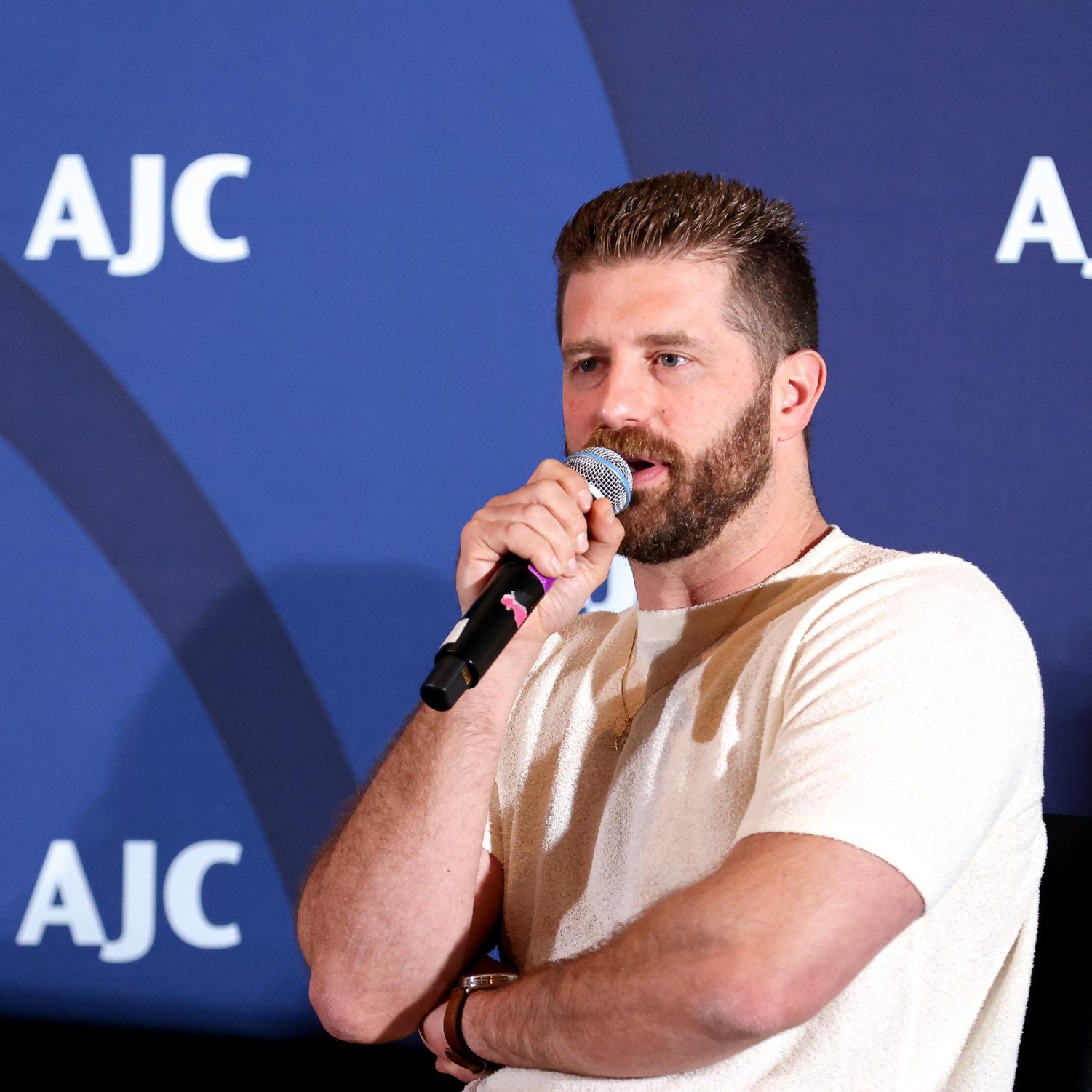
As the international community looks to phase two of the cease fire between Israel and the Hamas terror group in Gaza, the American Jewish Committee office in Abu Dhabi invited Dr Tal Becker to participate in discussions about what's next for the region. Dr Becker is one of Israel's leading experts on international humanitarian law and a veteran peace negotiator with Palestinians, Lebanese and Syrians. He is currently vice president of the Shalom Hartman Institute, and he joins us now right after the conference in Abu Dhabi to share some of the insights he contributed there.
Tal, welcome to People of the Pod.
Tal Becker:
Thank you very much, Manya.
Manya Brachear Pashman:
So Tal, you have just returned from a conference in Abu Dhabi where you really took a deep dive, kind of exploring the nature of Arab-Israeli relations, as we are now entering the second phase of the ceasefire between Israel and Gaza.
So I'm just curious, you've been steeped in this for so long, for decades, do you sense, or did you sense a significant shift in the region when it comes to Arab-Israeli relations and the future?
Tal Becker:
So I think Manya, we're at a very kind of interesting moment, and it's hard to say exactly which direction it's going, because, on the one hand, we have had very significant military successes. I think a lot of the spoilers in the region have been significantly set back, though they're still there, but Israel really has had to focus on the military side of things a lot. And it, I think, has strained to some extent, the view of what's possible because we're being so focused on the military side.
And I think it is a moment for imagining what's possible. And how do we pivot out of the tragedy and suffering of this war, make the most of the military successes we've had, and really begin to imagine what this region could look like if we're going to continue to succeed in pushing back the spoilers in this way.
Israel is a regional power, and I think it for all our vulnerability that requires, to some extent, for Israel to really articulate a vision that it has for the region. And it's going to take a little bit of time, I think, for everybody to really internalize what's just happened over these last two years and what it means for the potential for good and how we navigate that. So I really think it's kind of like what they call a plastic moment right now.
Manya Brachear Pashman:
A plastic moment, can you define that, what do you mean by plastic?
Tal Becker:
So what I mean by a plastic moment, meaning it's that moment. It's an inflection point right where, where things could go in one direction or another, and you have to be smart enough to take advantage of the fluidity of the moment, to really emphasize how do we maximize prosperity, stability, coexistence? How do we take away not just the capabilities of the enemies of peace, but also the appeal of their agenda, the language that they use, the way they try to present Muslim Jewish relations, as if they're a kind of zero sum game. So how do we operate both on the economic side, on the security side, but also on the imagining what's possible side, on the peace side. As difficult as that is, and I don't want to suggest that, you know, there aren't serious obstacles, there are, but there's also really serious opportunities.
Manya Brachear Pashman:
So what did you sense when you were there, in terms of the perception of Israel? I mean, were people optimistic, for lack of a better term?
Tal Becker:
So first of all, it was, you know, a great opportunity to be there. And having been involved, personally, very intensively in the Abraham Accords, I always feel a bit emotional whenever I'm in the Emirates in particular, and Morocco and Bahrain and so on. And to be honest, I kind of feel at home there. And so that's a lovely thing.
I think, on the one hand, I would say there's a there's a relief that hopefully, please God, the war in Gaza is is behind us, that we're now looking at how to really kind of move into the phase of the disarmament of Hamas and the removal of Hamas from governance, you know, working with the Trump team and the Trump plan. And I think they have a bunch of questions. The Emiratis in particular, are strategic thinkers. They really want to be partners in advancing prosperity and stability across the region in pushing back extremism across the region, and I think they're eager to see in Israel a partner for that effort. And I think it puts also a responsibility on both of us to understand the concerns we each have. I mean, it takes some time to really internalize what it is for a country to face a seven-front war with organizations that call for its annihilation, and all the pressure and anxiety that that produces for a people, frankly, that hasn't had the easiest history in terms of the agenda of people hating the Jewish people and persecuting them. So I think that takes a bit of appreciation.
I think we also, in the return, need to appreciate the concerns of our regional partners in terms of making sure that the region is stable, in terms of giving an opportunity for, you know, one way I sometimes word it is that, we need to prepare for the worst case scenario. We need to prevent it from being a self fulfilling prophecy.
Which really requires you to kind of develop a policy that nevertheless gives an opportunity for things to get better, not just plan for things to get worse. And I think our partners in the Gulf in particular really want to hear from us, what we can do to make things better, even while we're planning and maybe even a bit cynical that things might be very difficult.
Manya Brachear Pashman:
So you mentioned the Abraham Accords, and I'm curious if you feel that Israel, I know Israel has felt isolated, at times, very isolated, and perhaps abandoned, is even the correct word.
Do you feel that is the case as we enter the second phase of the ceasefire? Do you feel that is less so the case, and do you feel that that might be less so the case because of the Abraham Accords existence?
Tal Becker:
Well, so let's first talk about the Abraham Accords and their significance.So I think a lot of people present the Abraham accords as kind of an agreement that is about shared interests and shared challenges and so on, and that's definitely true. But they are, in my view, at least aspirationally, something much bigger than that. First of all, they are almost the articulation of what I call a Judeo Muslim civilization, the view that Jews and Muslims, or that all different peoples of the Middle East belong to this place and have a responsibility for shaping its future. The way I describe the Abraham Accords is that they're a group of countries who basically have said that the argument about who the land belongs to is not as important as the understanding that we all belong to the land. And as a result of that, this is kind of a partnership against the forces of extremism and chaos, and really offering a version of Israeli Jewish identity and of Muslim Arab identity that is in competition with the Iranian-Hezbollah-Hamas narrative that kind of condemns us to this zero sum conflict.
So the first thing to say is that I think the Abraham Accords have such tremendous potential for reimagining the r






 United States
